


Designing a Wellness App that Helps Manage Screen Time
MASTER’S PROJECT
DISCOVERY / UX RESEARCH / MOBILE
ROLE
UX Designer
Researcher
TIMELINE
4 weeks
PROBLEM
Young adults fail to manage their screentime at the expense of their well-being
With the rise of social media addiction, people find themselves spending excessive time scrolling through feeds at the cost of their sleep and overall well-being. These negative outcomes can be difficult to avoid because of the addictive nature of social media, especially in the form of short video content. Users need an app that will help them take control of their own lives, build healthier habits, and prioritize their well-being.
“How can an app allow young adults to improve their digital habits in the age of social media?”
SOLUTION
Introducing HA:PI
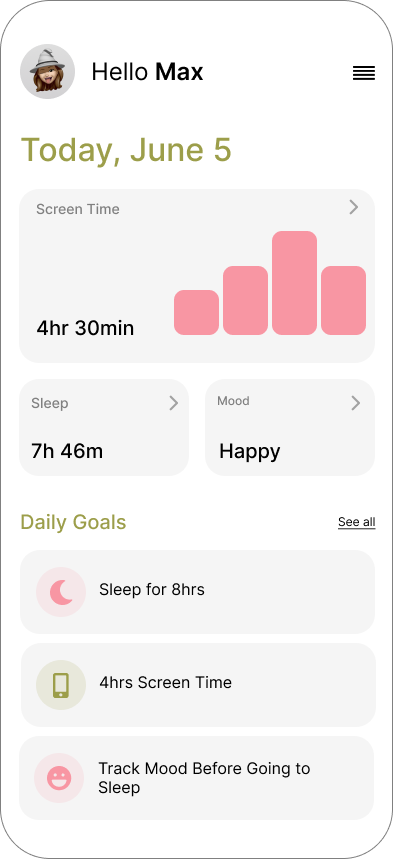
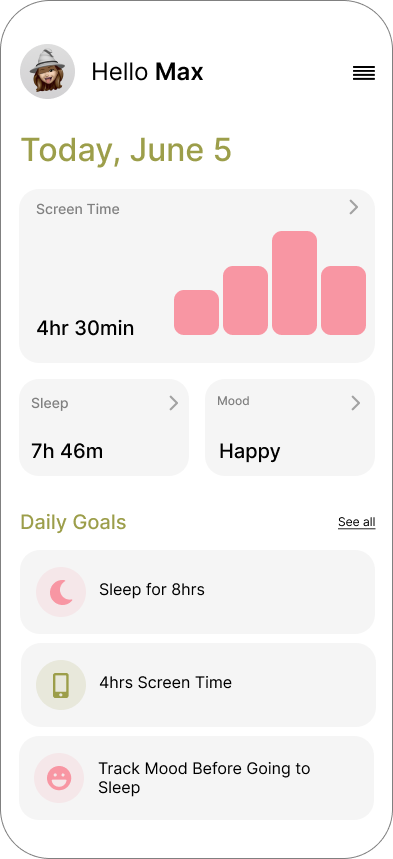
Easily manage screen time and monitor sleep and mood trends using an accessible and dynamic dashboard that showcases up-to-date data and progress
Track Screen Time, Sleep, and Mood
Doom Scrolling Detection and AI Mood Analysis
AI prompts screen breaks when detecting doom scrolling behavior and analyzes changes in mood based on self-reported data
Track your progress and earn rewards for reaching goals and building healthy digital habits
Goal Setting and Streaks
Diving Deeper into the Problem
RESEARCH
Literature Review
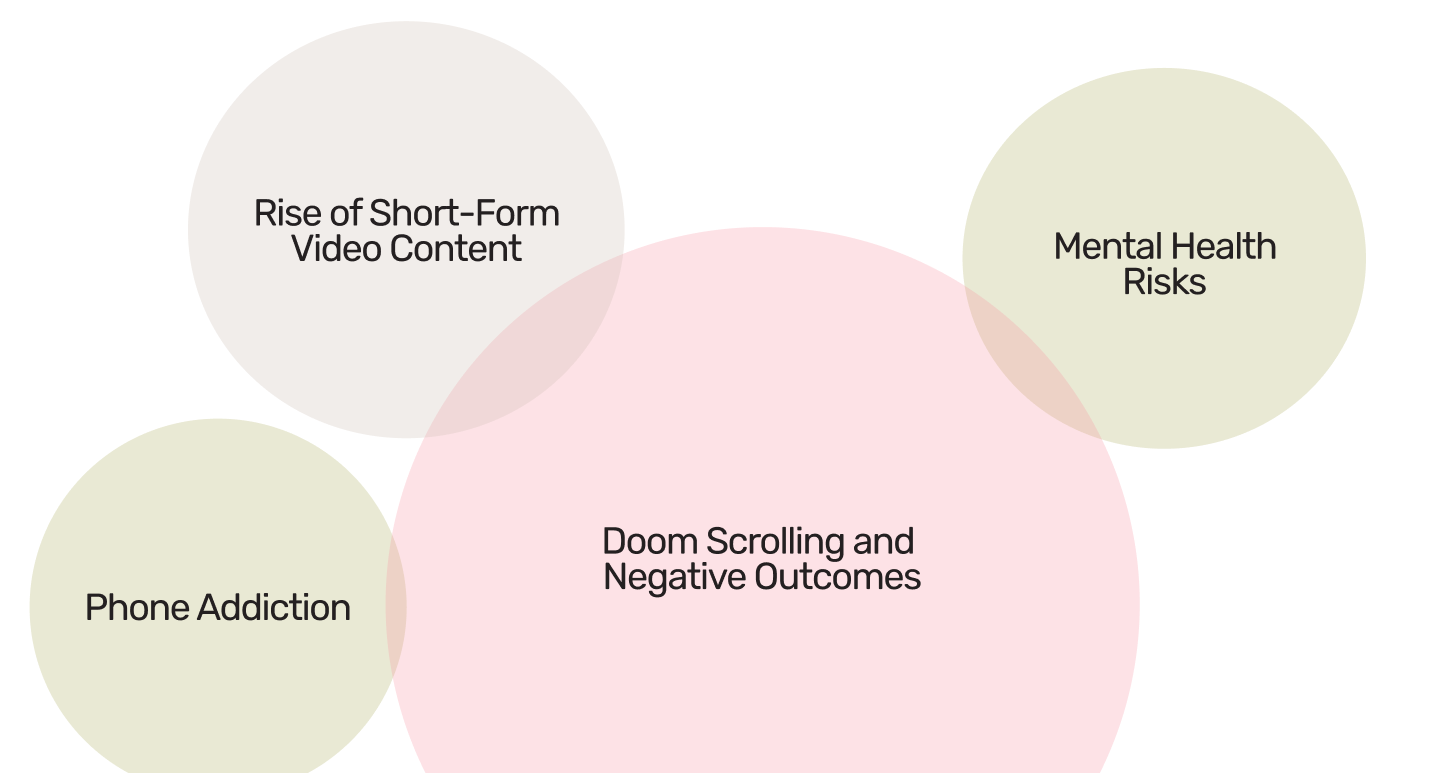
Through literature research, 4 key points stood out. First, there has been a rise in short-form video content. Apps such as TikTok have successfully drawn users in, exceeding over 1 billion active users thus far (TikTok, 2021). During the pandemic, the word "doom scrolling" was coined and is a new concept that describes when social media users scroll endlessly through depressing and negative feeds out of habit (Jennings, 2020; Watercutter, 2020). The act of doom-scrolling has been associated with negative outcomes such as greater levels of existential anxiety and pessimism. Along the lines of doom scrolling, phone addiction in general has become a big issue due to the increasing popularity of social media platforms. This extreme behavior can negatively impact different aspects of the user’s life, even to an extent that it “impairs other important life areas” (Andreassen et al., 2016). And lastly, with this popularity, there have been concerns about social media's impact on mental health. There have been many studies done that have linked social media use to negative outcomes such as anxiety and loneliness (Latikka et al., 2021)
Competitive Analysis
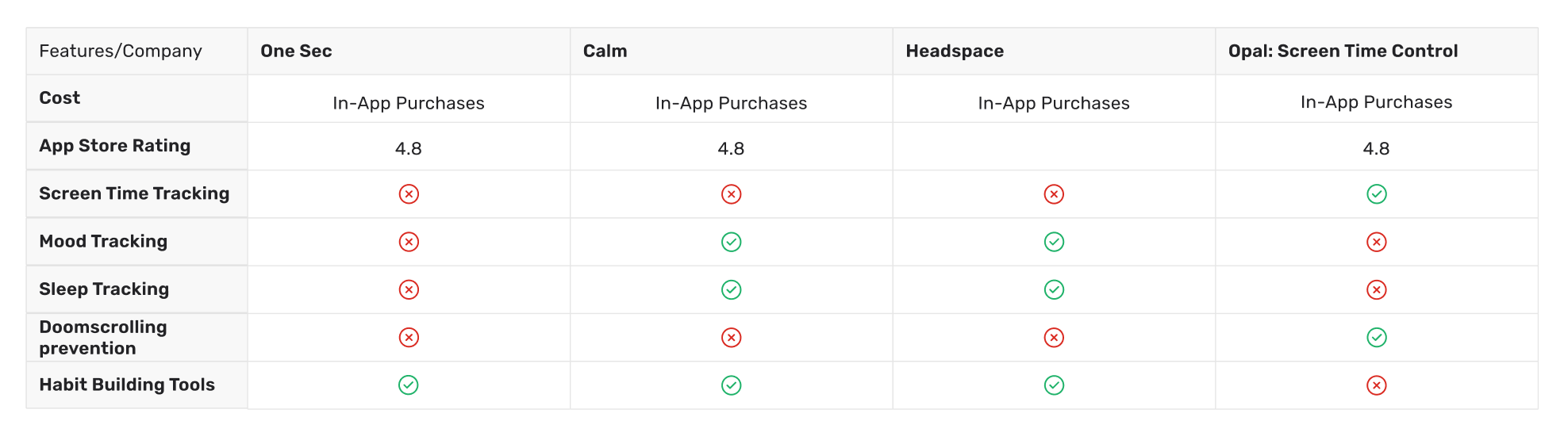
Additionally, since the wellness and screen time management space had fair competition, I compared 4 other apps that have similar goals to reduce screen time and improve mental health. The key insight from this research was that there wasn’t an app that integrated features for both screen time management and mental health support.
Survey
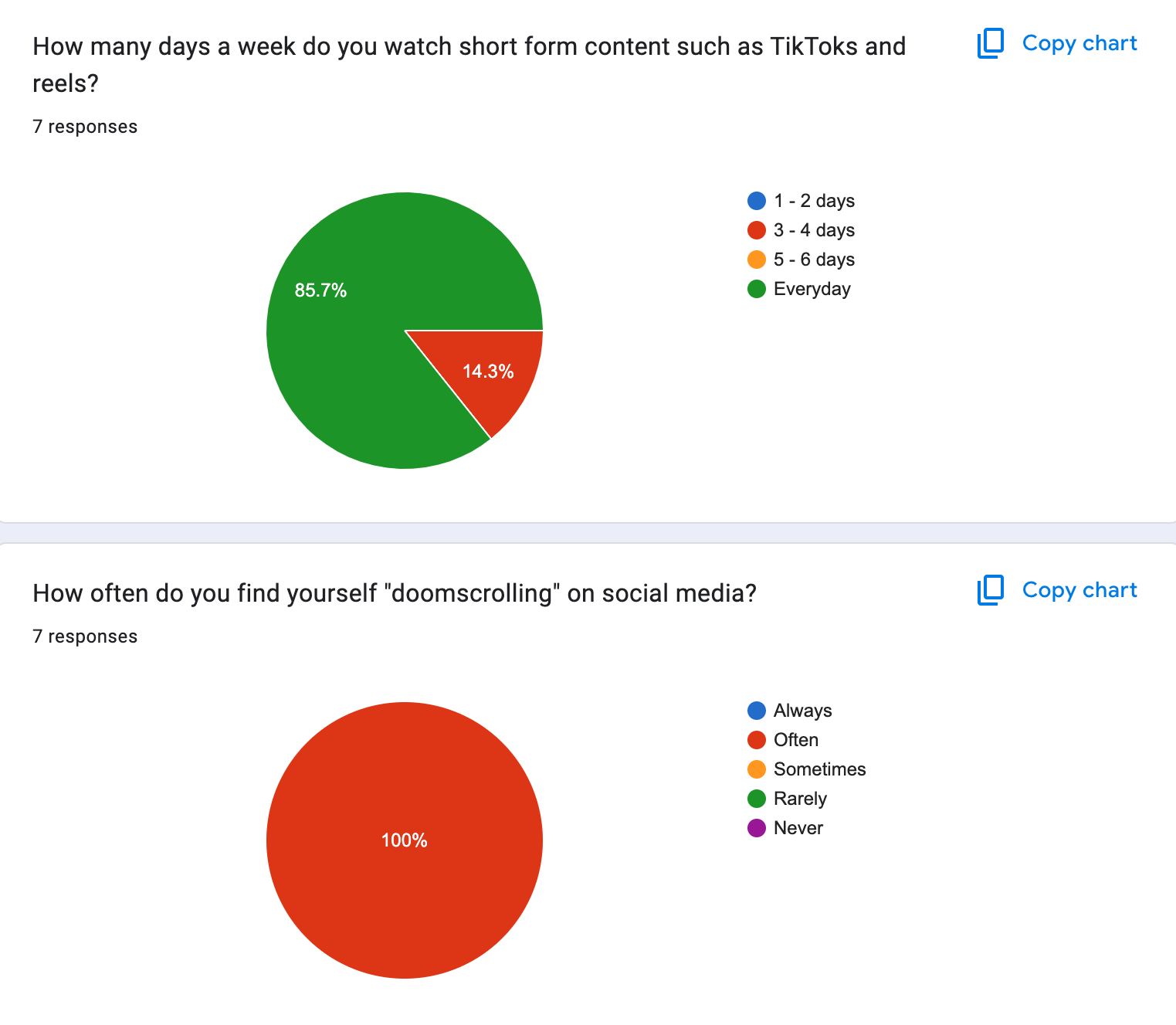
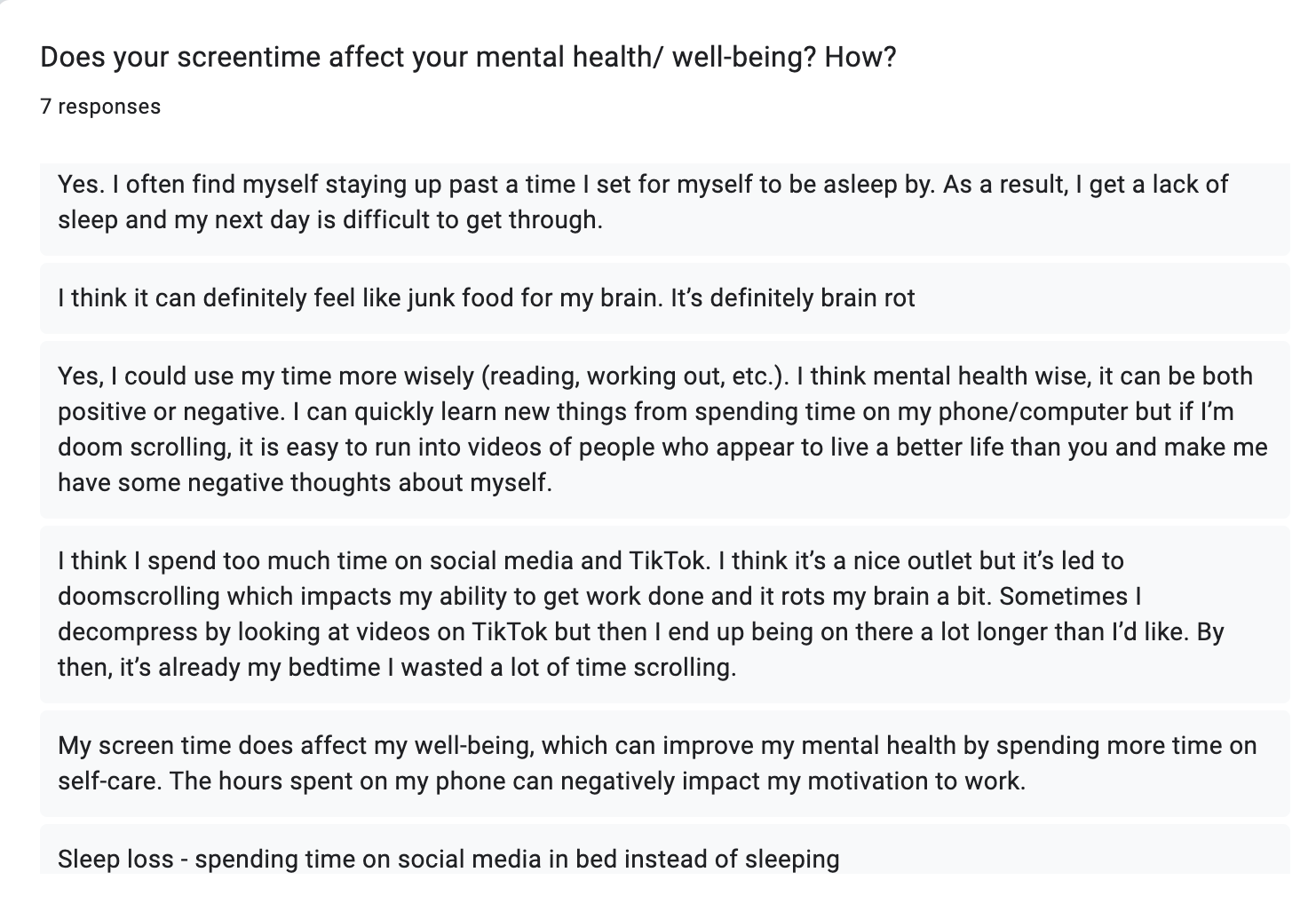
Next, I wanted to deepen my understanding of the user’s digital habits, relationship with their screen time, and any pain points, so I employed a survey that asked both quantitative and qualitative questions.
Analysis
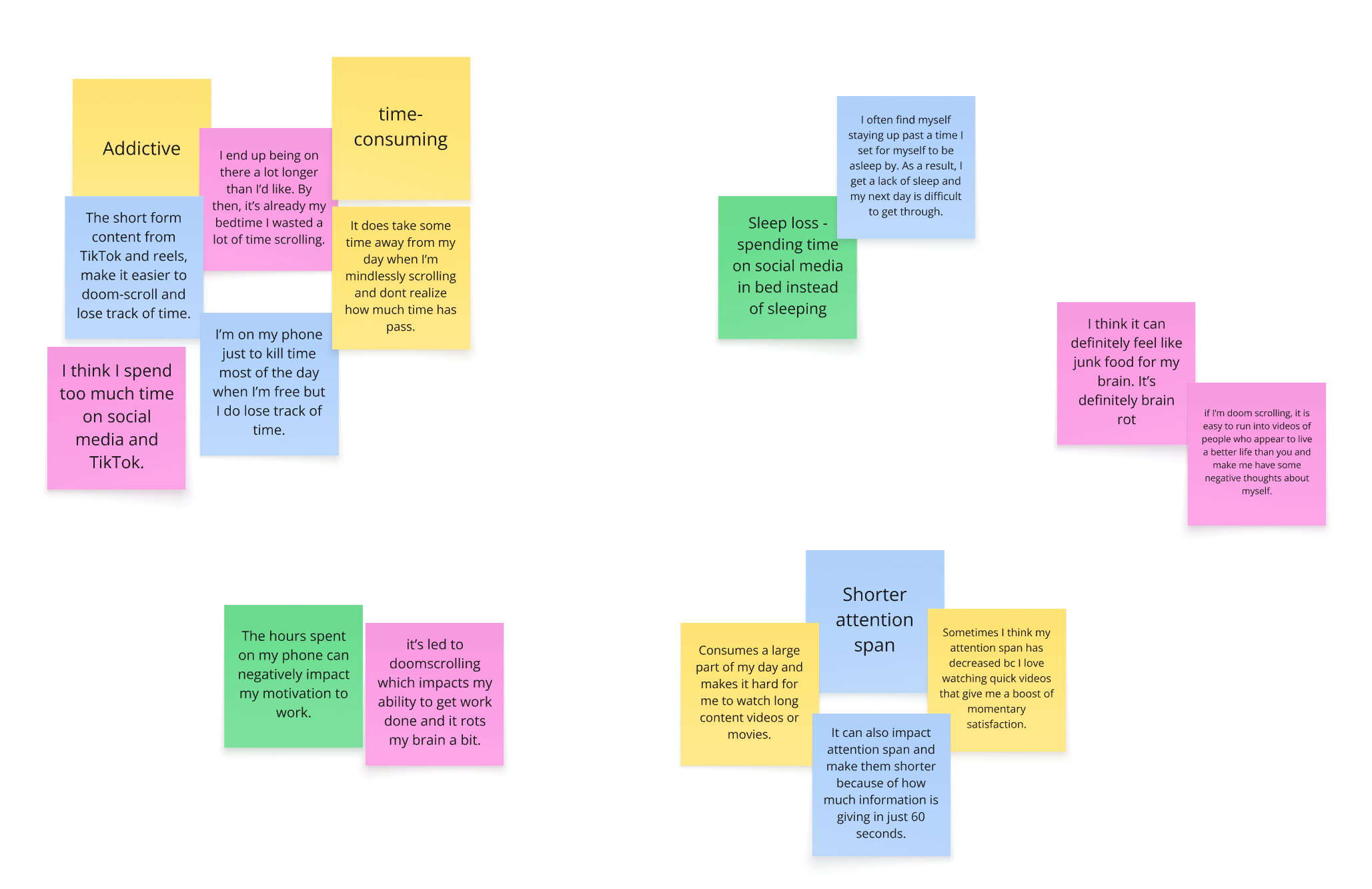
I created an affinity map using the collected data points to help group findings and highlight key insights.
KEY INSIGHTS
Young adults struggle to control their screen time and how it impacts their well-being
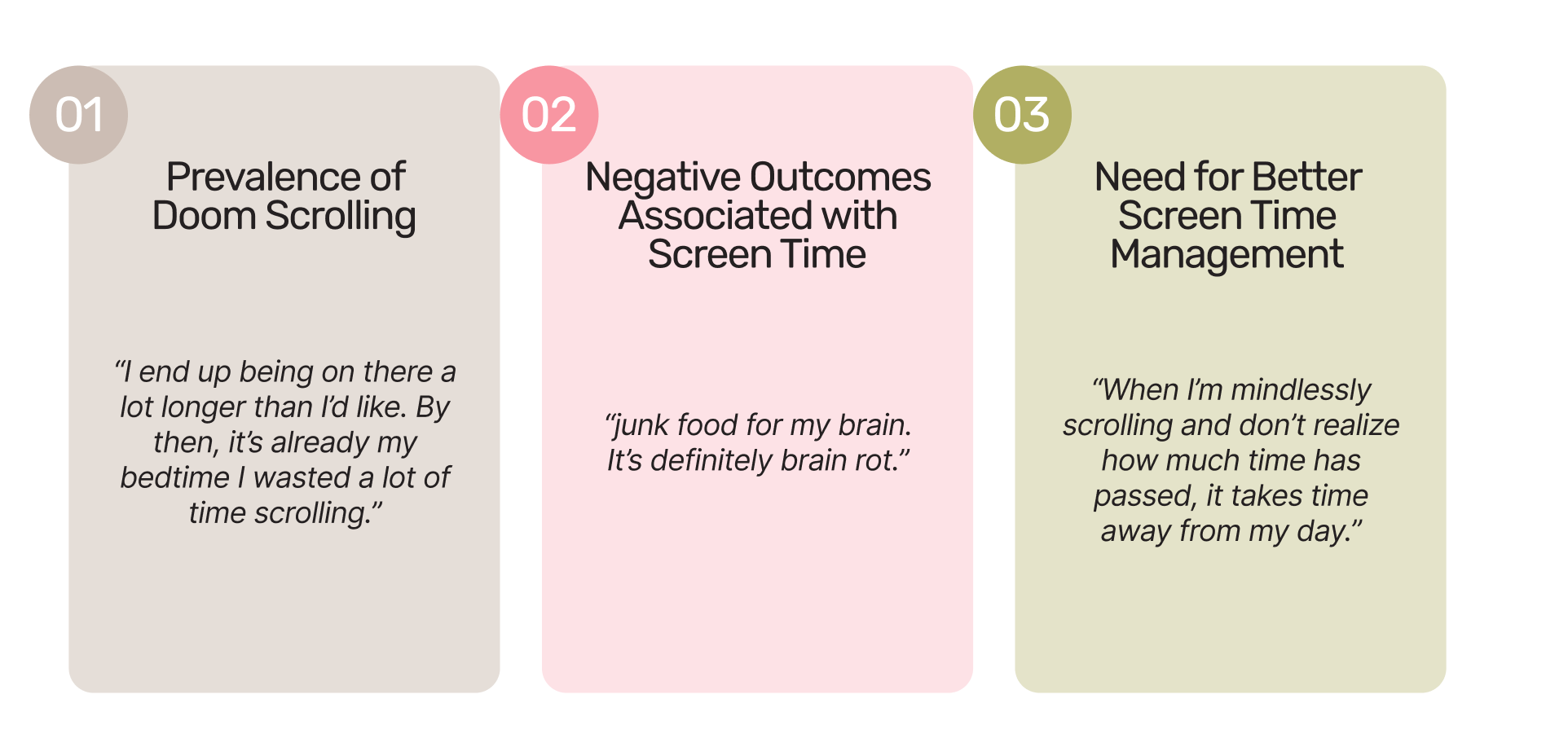
After analyzing the major themes derived from the affinity map, the 5 major clusters were narrowed down to 3 key insights that will be used to drive the next phase, ideation.
Support young adults to build healthy digital habits and combat the negative outcomes associated with their screen time?
HOW CAN I…
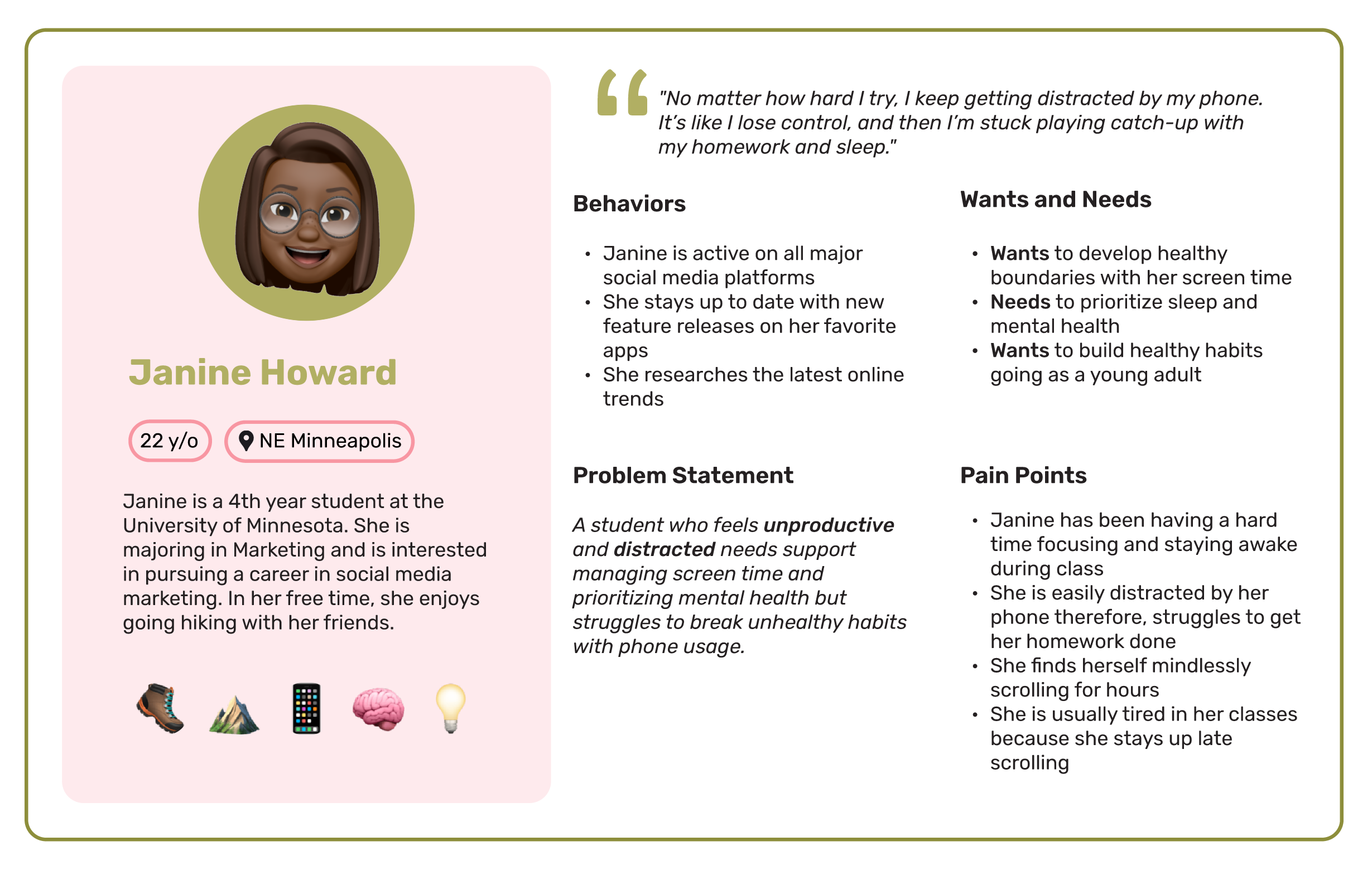
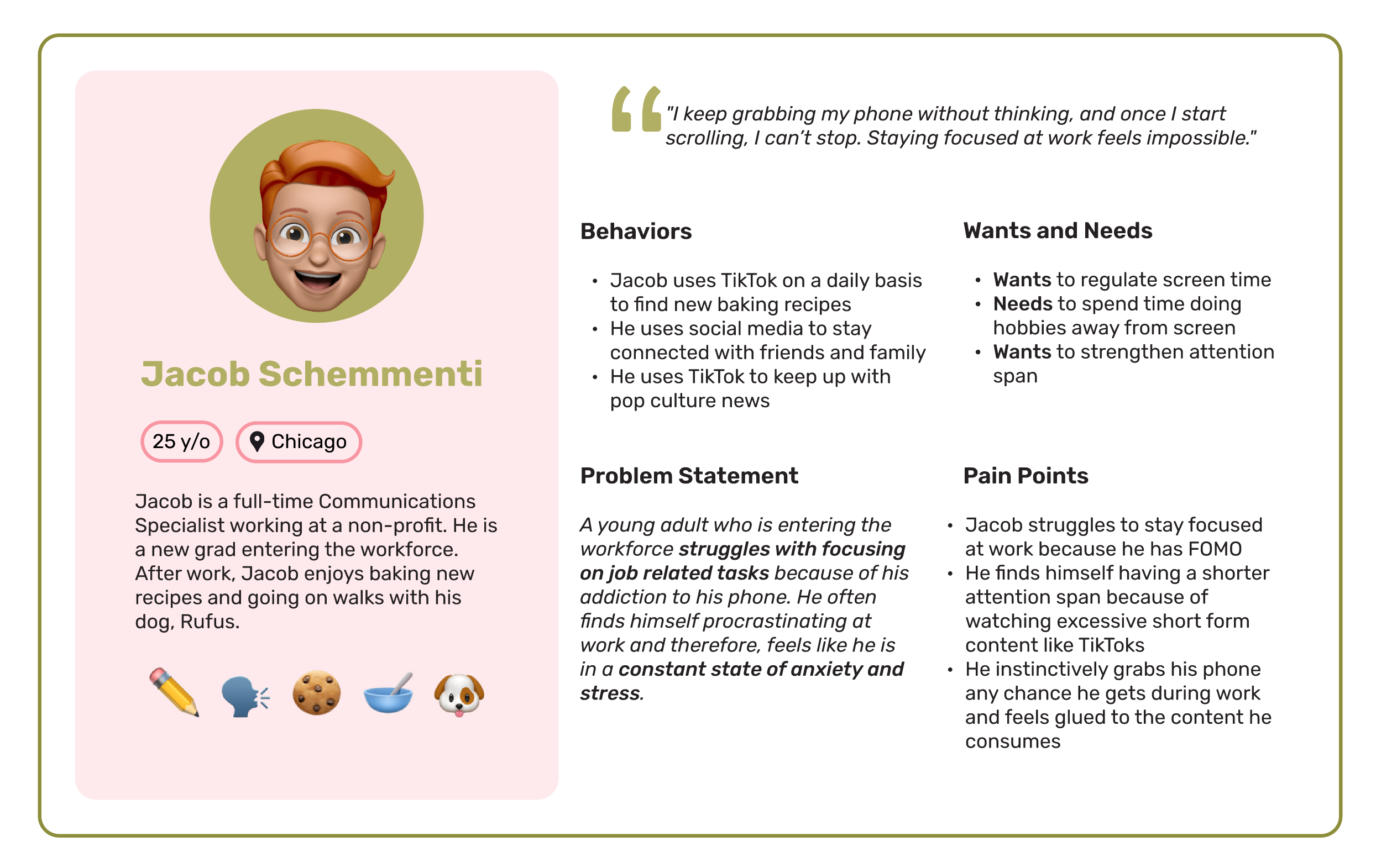
PERSONAS
DESIGNING A SOLUTION
Using the research and insights found, I believe that a successful solution should touch on these 4 elements. A combination of these elements will make this app competitive and unique against what is already being offered on the market.
Elements + Key Features
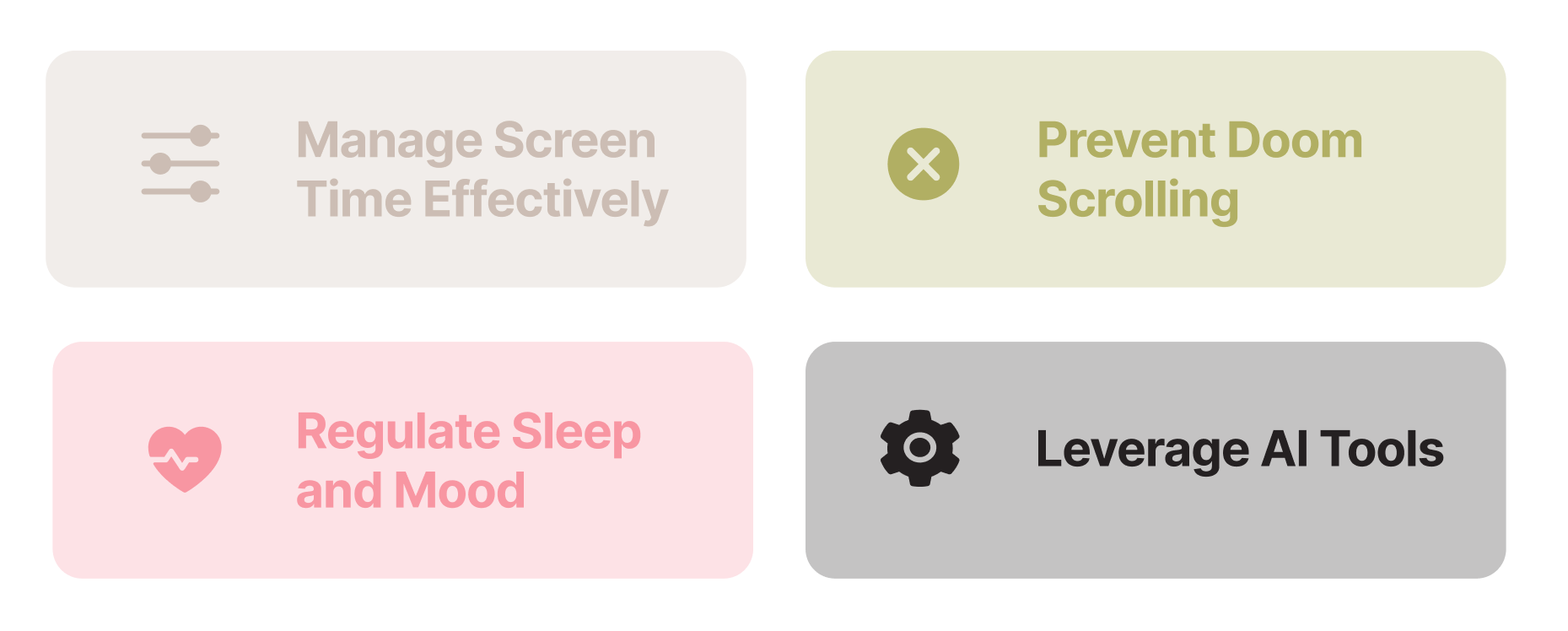
The key features listed below were decided using the pain points discovered during the research phase. The first feature will allow users to easily manage screen time and monitor sleep and mood trends using an accessible and dynamic dashboard that showcases up-to-date data and progress. The second feature would leverage AI to prompt screen breaks when detecting doom-scrolling behavior and analyze mood changes based on self-reported data. The last feature helps track your progress and earn rewards for reaching goals and building healthy digital habits.
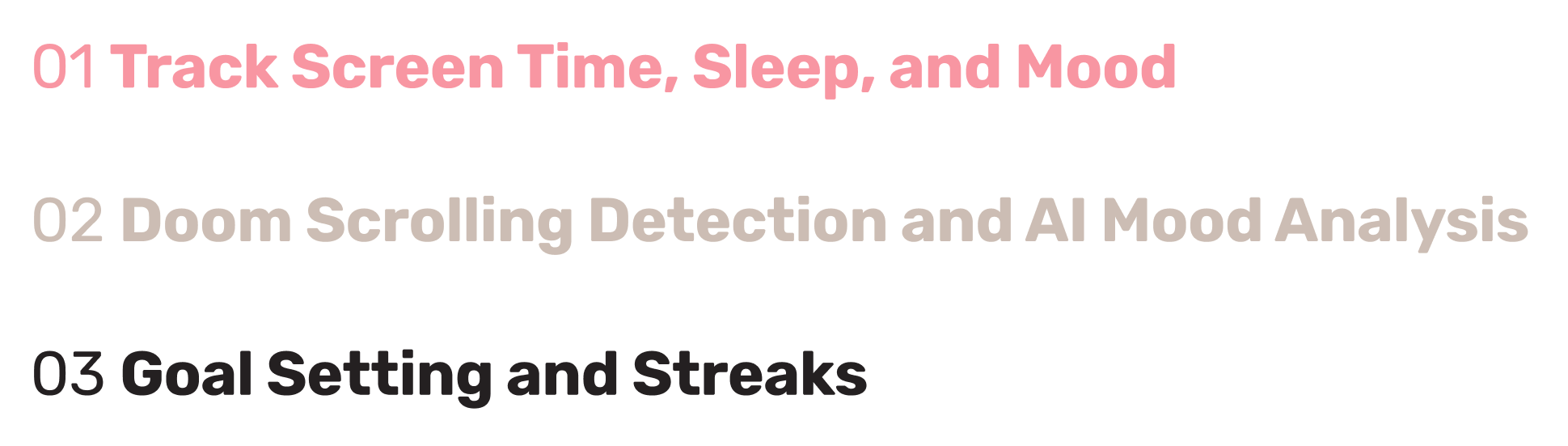
These features are conceptual solutions to the biggest pain points related to screen time found through the user survey.
Branding
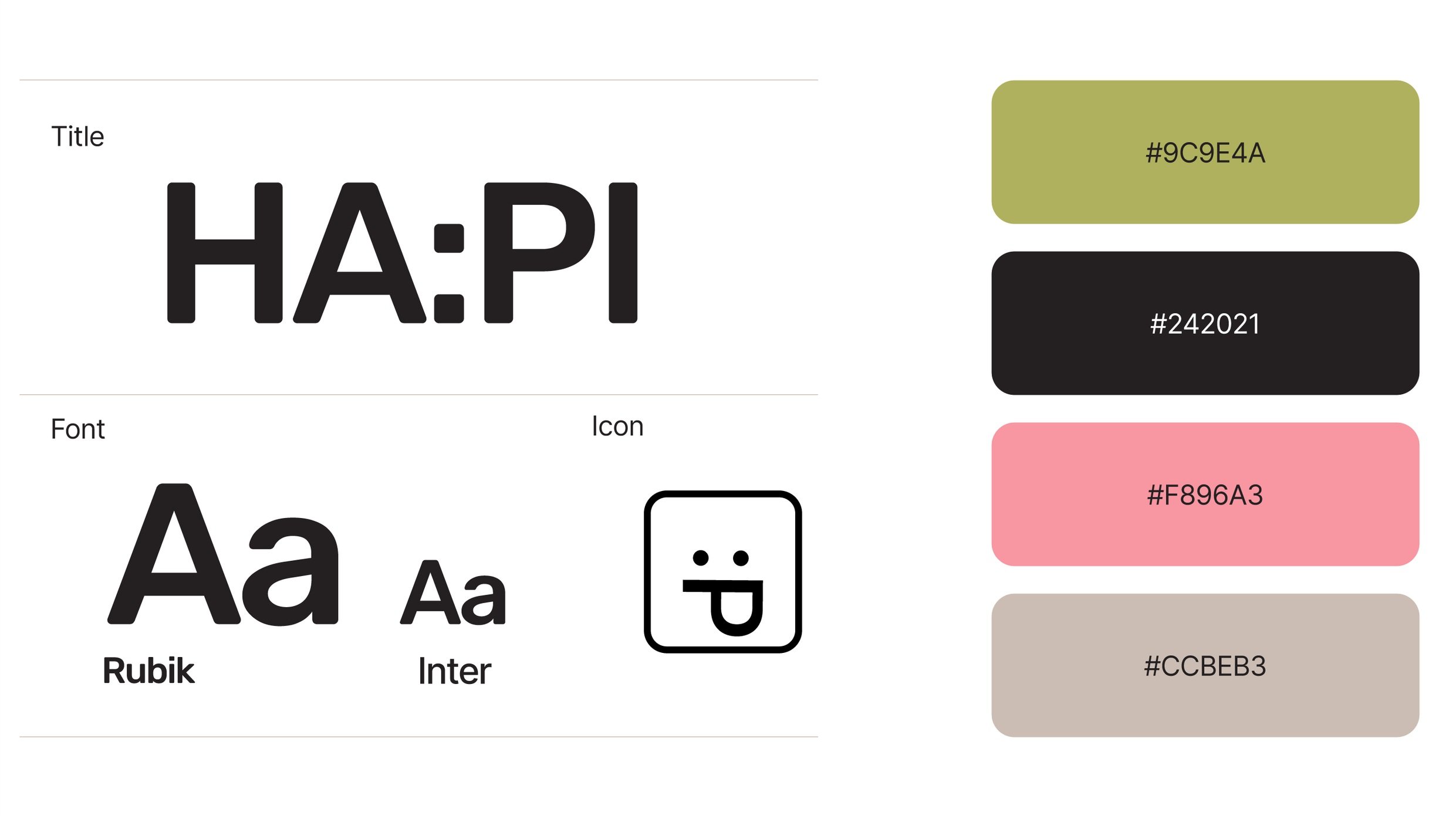
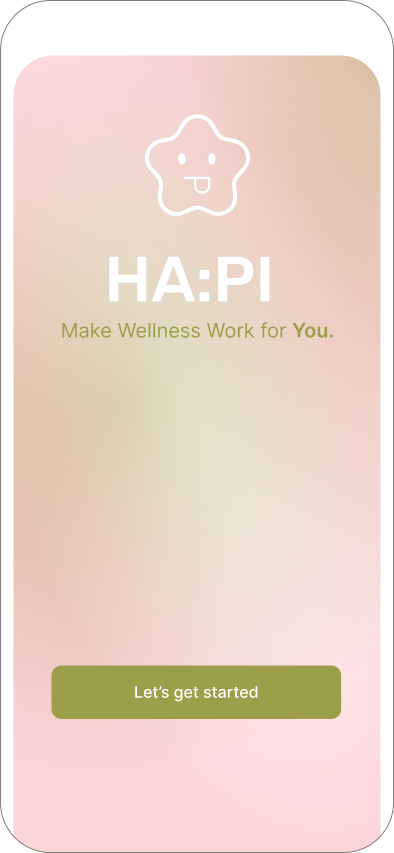
The name HA:PI is a play on the word “happy” and connects to the goal of the app to help users live a happier and healthier life through improving their mental health and overall well-being. HAPI is also an acronym that stands for Habit Awareness and Positive Intentions. I also chose bright yet soft colors to play into the positive healing HA:PI aims to provide. The primary font is Rubik, and the secondary font is Inter. I also created a logo using the colon and P. The colon is placed in front of the P to resemble the emoji with its tongue sticking out to create a sense of fun and playfulness.
SCREENS
TAKEAWAYS
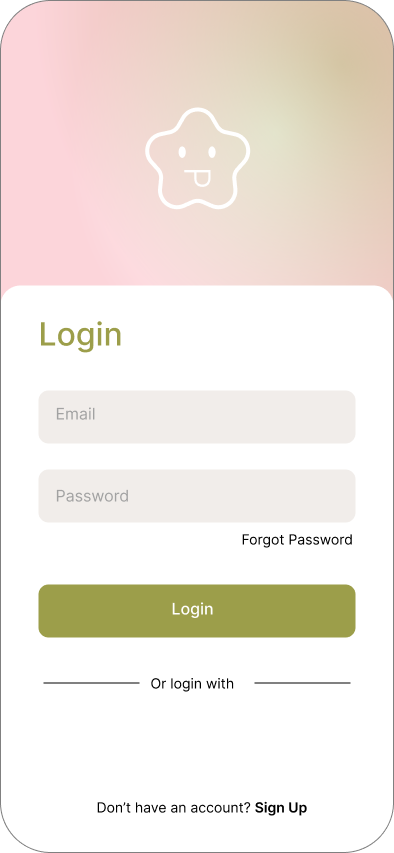
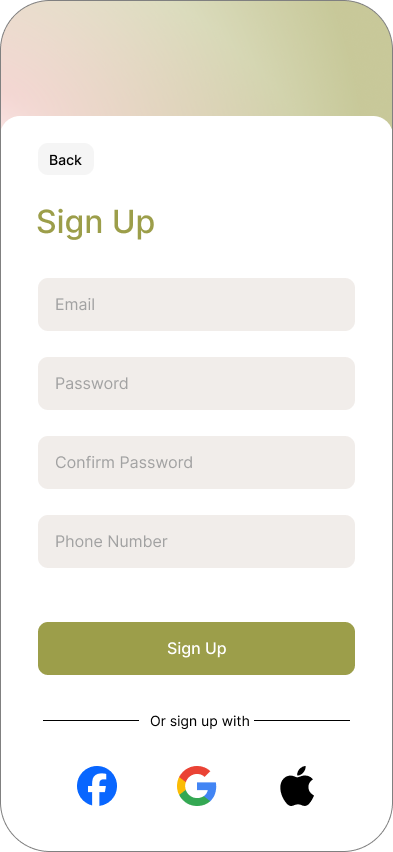
This project was completed as part of my master’s program, where we worked within a fast-paced timeline and tight deadlines. Because the course was focused on developing our discovery and research skills, the instructor encouraged us to prioritize understanding the problem space and validating user needs over creating high-fidelity UI designs. As a result, the interface design became a secondary focus, and many of the concepts remained at the static screen level.
If I had more time, I would have loved to further refine the interactions and bring the experience to life through more detailed user flows, prototypes, and micro-interactions. However, the project's emphasis on research reinforced an important lesson: great design starts with a deep understanding of the problem you're trying to solve. Without a clear definition of the user's needs, goals, and pain points, it's easy for a solution to feel unfocused or disconnected from the real challenge. This experience strengthened my appreciation for the discovery process and showed me how a well-defined problem creates a stronger foundation for every design decision that follows.